
Is the industry asking for tax breaks?
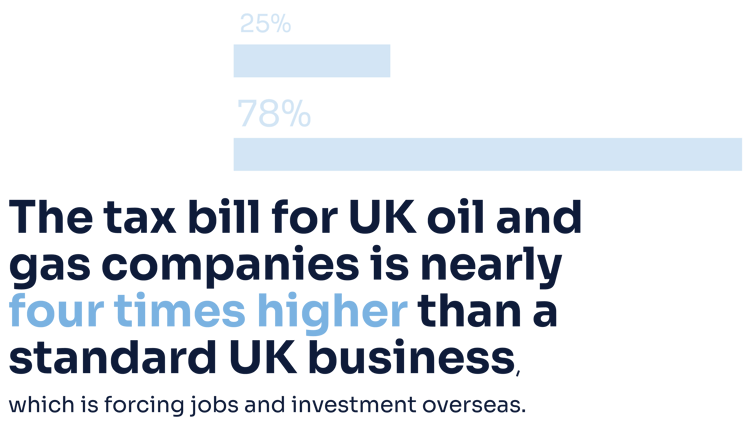
The industry is asking for a stable, investable tax regime - not low taxation.
UK oil and gas production is already taxed at a much higher rate on profits than standard company profits. The main UK corporation tax rate is 25%, but upstream oil and gas profits face 30% Ring Fence Corporation Tax, a 10% Supplementary Charge and the 38% Energy Profits Levy (EPL), taking the current headline rate to 78%.
The EPL is far more restrictive than ordinary corporation tax. Historic losses cannot be used to reduce EPL liabilities, while finance and decommissioning costs are excluded from the calculation. The general EPL investment allowance was abolished for new expenditure from November 2024, with only a reduced decarbonisation allowance retained.
Since the EPL was introduced in 2022, the regime has been repeatedly changed, increased and extended — exactly the kind of instability that makes long-term offshore investment harder, evidenced by bp's recent decision to market its North Sea assets.
The sector is not asking to pay little tax. It is asking for a temporary windfall tax to be replaced by a more predictable regime that supports investment when prices are normal, while still allowing the Treasury to benefit when prices are exceptionally high.
OEUK argues that bringing in the proposed Oil and Gas Revenue Levy from April 2027 could increase investment and generate an additional £13.4 billion in direct and payroll taxes over ten years.