
Does exported North Sea oil benefit the UK?
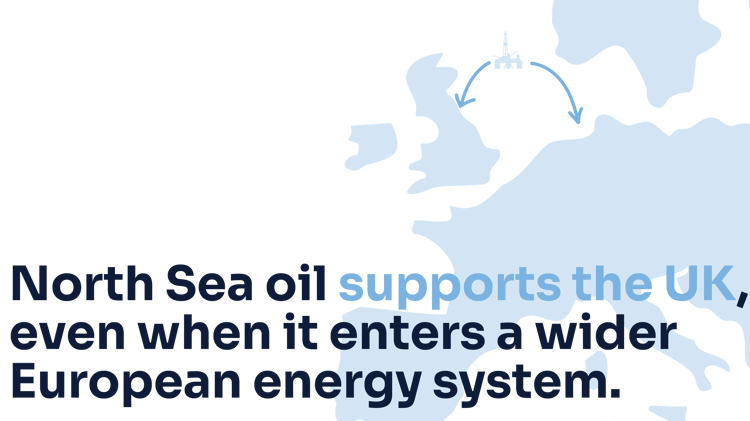
Exports of oil - just like exports of whisky - generate huge income for Britain, while North Sea production supports jobs, investment, tax revenues and supply-chain capability at home. It also contributes to the wider European oil products system on which the UK itself depends.
Britain has been part of a wider European and international oil-products system for years. DESNZ says the UK exports crude mainly to the Netherlands and other European countries, with 90% of UK primary oil exports going to the EU in 2024 - mainly to refining hubs in the Netherlands, where it is processed into products such as road diesel, gas oil and heating fuels.
Crude oil and refined fuels move through international markets because different refineries are configured for different grades of crude to make different products. The UK benefits from easy access to major oil trading hubs, with the Netherlands and Belgium together providing most of the UK’s oil product imports.
The UK was a net importer of oil products in 2024 with UK refineries only meeting 54.9% of road diesel demand and 28.8% of jet fuel demand that year. We needed imports to help meet demand for both.
North Sea oil adds supply to the wider oil and fuel system Britain already depends on, while domestic production keeps more jobs, investment, tax revenue and supply chain work in the UK.
This is particularly important after Grangemouth, Scotland’s only oil refinery, stopped crude processing in 2025 and became an import terminal, showing what is at stake when domestic energy capability is lost while demand for fuels remains.
The wider UK benefits are substantial. Offshore Energies UK says the North Sea energy production industry adds more than £20 billion a year in value to the UK economy and supports around 200,000 jobs. HMRC figures show UK oil and gas production generated £4.5 billion in tax revenues in 2024–25.
So the claim that exported North Sea oil provides no UK benefit is wrong. North Sea oil supports the European oil products system Britain relies on, while the wider industry supports UK jobs, UK investment, UK tax revenues and the supply chain capability needed for the energy transition.