
Do new licenses protect jobs?
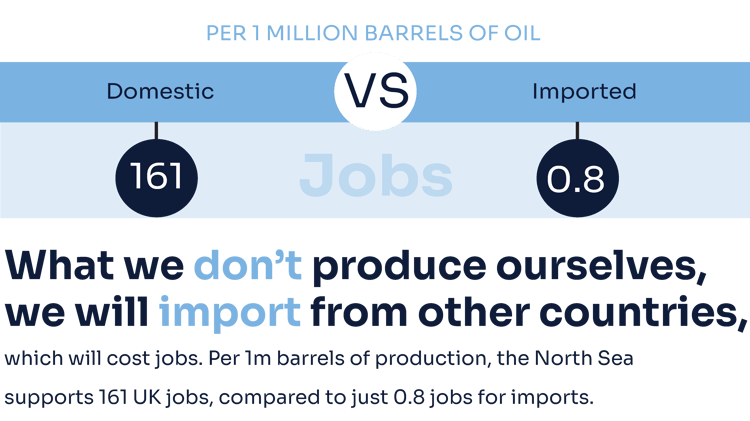
Ending new licensing does not just affect future discoveries - it sends a clear signal about future North Sea investment.
The workforce risk is already visible. Robert Gordon University’s 2026 “Delivering Positive Energy” report says the North East of Scotland hosts around one in three of the UK’s offshore oil and gas jobs. Renewable job creation is not currently keeping pace with oil and gas decline and, depending on future investment and activity, the region’s offshore energy workforce could fall by a further 18,000 by 2035.
However, while the North Sea is a declining basin, it is not an empty one. The NSTA estimates the UK still has 2.9 billion barrels of oil equivalent in proven and probable reserves and 6.2 billion barrels in discovered but undeveloped resources. Turning resources into real projects requires investment, approvals and confidence.
Licensing is not only about whether one exploration block quickly becomes a producing field. It is also a signal to investors, operators and supply-chain companies about whether the UK wants future activity in the basin. A block on new licensing tells the market that the door is closing, making it harder to justify long-term commitments of capital, people and equipment.
Those same people and companies are needed for the transition. RGU says over 90% of oil and gas skills are readily transferable to adjacent offshore energy sectors, including renewables. But transferable skills only help if the workers, firms and supply-chain capability are still here when the new work arrives.
No one can licence the North Sea back to its historic peak. But there is still material potential left, and developing it responsibly is part of protecting jobs, sustaining industrial capability and reducing unnecessary import reliance while demand remains. New licensing is not the whole answer, but it is part of the investment signal needed to keep activity, skills and energy security anchored in the UK through the transition.