
Is UK oil and gas cleaner than imports?
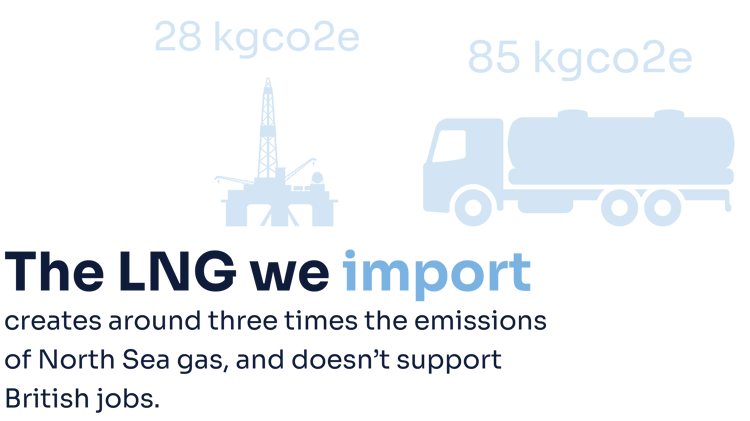
As North Sea output declines, Britain is becoming more reliant on LNG – which carries a substantially higher carbon footprint than UK production.
Fossil fuels still provide 75.2% of UK primary energy demand. While that demand remains, where the UK sources its oil and gas matters.
For gas, the differences are significant. The North Sea Transition Authority estimates that, before combustion, imported LNG creates around three times the production-and-supply-chain emissions of UK-produced gas: 85 kgCO₂e compared with 28 kgCO₂e for the same amount of energy. In 2024, LNG supplied 15% of UK gas but produced 46% of the emissions associated with supplying it.
Norwegian pipeline gas is cleaner than some UK gas. But Norway cannot fill every future gap: Equinor has said it has no spare oil and gas capacity, with production already near capacity. As UK production declines, any gap not met by lower demand will increase reliance on imports, including LNG.
Most emissions arise when oil and gas are ultimately used, so reducing demand remains essential. But replacing domestic production with imports does not automatically cut emissions.
Carbon is not the only consideration. Greater import dependence also leaves Britain more exposed to conflicts, sanctions and supply disruption. That risk was underlined in May 2026, when the UK deferred a planned ban on diesel and jet fuel refined from Russian crude in third countries because of concerns about international supplies.